Background
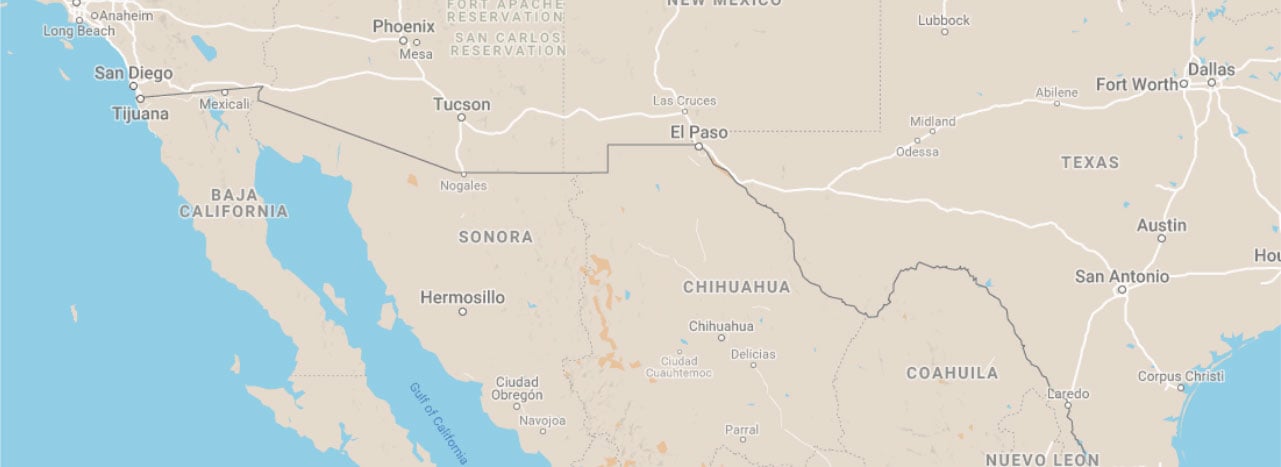
Gadsden is a small, unincorporated community located between the cities of Somerton and San Luis in Yuma County, Arizona. In 2002, residents received drinking water services from the Gadsden Water Company, a private utility serving a total of 186 residential accounts. However, the community did not have access to a centralized wastewater collection or treatment system. The only wastewater disposal facilities available were on-site units, primarily septic tanks and leach field systems, but there were also a few cesspools, as well as direct discharges to ditches. These on-site disposal systems were not functioning properly due to age, inadequate maintenance and a seasonally high-water table not conducive to these types of systems. To remedy this situation, Yuma County Improvement District No. 96-7 proposed building a wastewater collection system and connecting it to the wastewater treatment plant in San Luis, Arizona.
Project Scope
The project consisted of constructing a community-wide gravity collection system in two phases: I) land acquisition for the lift station and engineering design; and II) installation of approximately 13,213 linear feet (2.5 miles) of sewer lines and 186 residential sewer connections, along with the decommissioning of the on-site disposal units, as well as the construction of a lift station and 19,000 feet (3.6 miles) of 6-inch force main to convey the wastewater to the treatment plant (WWTP) in San Luis, Arizona.
Benefits
The project provided first-time wastewater collection and treatment services to the entire community, thereby alleviating health and environmental problems caused by failing and/or inadequate on-site disposal systems.