Background
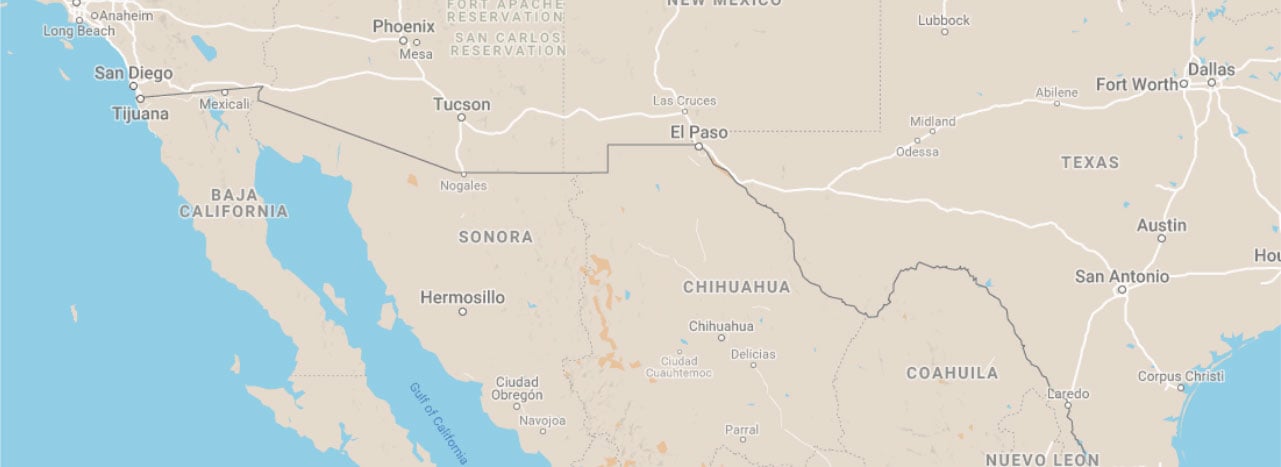
The irrigation district was originally established in 1928 and covers 64,828.12 acres in the central part of Hidalgo County, in the Lower Rio Grande Valley of Texas. The district delivers water to 47,000 acres of irrigable land under 4,000 water accounts. In addition, it provides raw water to five municipalities—Alamo, McAllen, Pharr, San Juan and Edinburg— and the North Alamo Water Supply Corporation.
The district pumps water directly from the Rio Grande into a settling basin (reservoir) via a gravity canal and then into a conveyance system of pipelines and canals. In 2002, the district had an overall estimated conveyance efficiency of 80 percent, which indicates an average water loss of 11,176 acre-feet from evaporation and seepage.
Constructed in 1911, Lateral “A” is a concrete lined canal running 7.26 miles east from the district’s reservoir, supplying water to 6,640 acres of land. The existing lining of the lateral is severely cracked and could fail due to continued deterioration and seepage.
Description
The project consists of covering Lateral A with a geomembrane liner, with an estimated long-term seepage reduction effectiveness of 95 percent, and a 3-inch shotcrete cover to protect the liner, thus extending its service life and reducing operation and maintenance requirements and costs. In addition, farm turnouts will be reconstructed so that portable meters can be used to set flow rates to fields.
Benefits
The project reduced water losses from seepage, resulting in an estimated savings of 2,542 acre-feet of water a year. Energy savings from reduced pumping requirements are estimated at 161,705 KWH/year on average. The new lining also reduced operation and maintenance requirements and costs.